
Deep within a large-scale air separation plant, the silence of the facility is deceptive. Beneath the hum of compressors, billions of microscopic pores are engaged in a silent, high-stakes race. Nitrogen, oxygen, and trace contaminants navigate a labyrinth of crystalline structures where a fraction of a millimeter determines the difference between a high-purity product and a costly batch of off-spec gas.
In these industrial environments, the molecular sieve is not merely a consumable; it is the functional heart of the separation process. For specialized producers like the China Leading Molecular Sieve Manufacturer, JXKELLEY, the challenge of “high performance” is met not through marketing claims, but through the rigorous engineering of mass transfer efficiency.
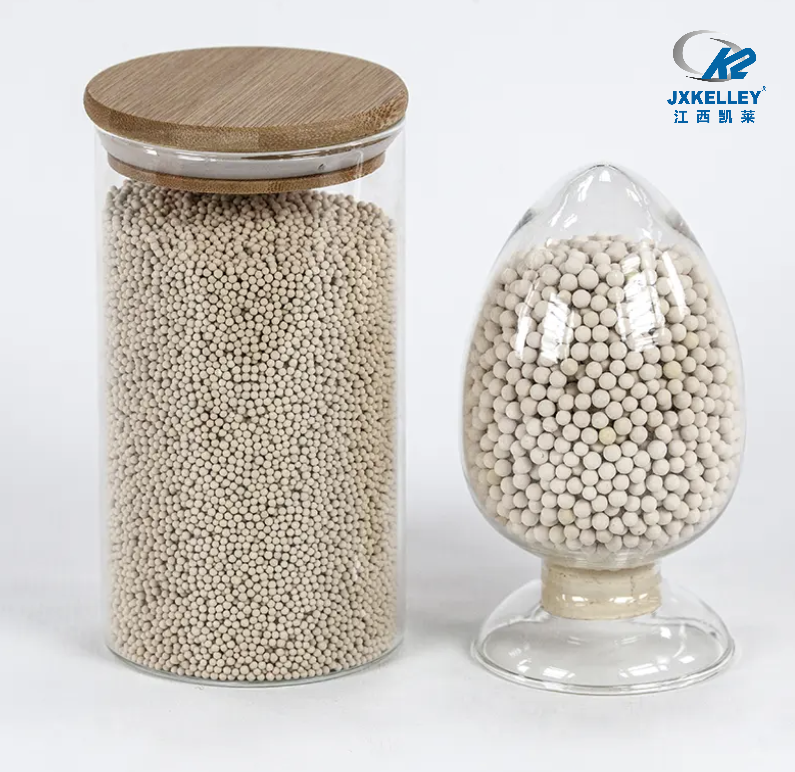
Molecular sieves are synthetic zeolites designed to separate molecules based on their size and polarity. As a premier molecular sieve manufacturer, JXKELLEY focuses on three critical engineering pillars: adsorption capacity, mass transfer rate, and mechanical integrity. By shifting the focus from simple commodity supply to the optimization of separation efficiency, the company helps industrial operators reduce energy consumption and maintain peak purity levels in demanding environments like petrochemical refining and medical oxygen production.
The Foundation of Performance in the Pingxiang Industrial Cluster
The ability of JXKELLEY to deliver consistent performance is deeply rooted in its geographic and industrial heritage. Based in Pingxiang, Jiangxi Province—often recognized as the hub of China’s chemical packing industry—the company benefits from a mature, integrated supply chain. This localized ecosystem allows JXKELLEY to maintain granular control over the production process, from raw material selection to the final activation of the crystalline powder.
Performance in mass transfer begins at the source. By leveraging the specialized expertise of the Pingxiang cluster, which accounts for a significant portion of national chemical packing output, JXKELLEY ensures that its molecular sieve products possess high crystal purity and uniform pore distribution. This structural consistency is the primary prerequisite for predictable adsorption behavior, ensuring that every bead in a multi-ton vessel performs exactly like the last.
Maximizing Efficiency through Adsorption Capacity
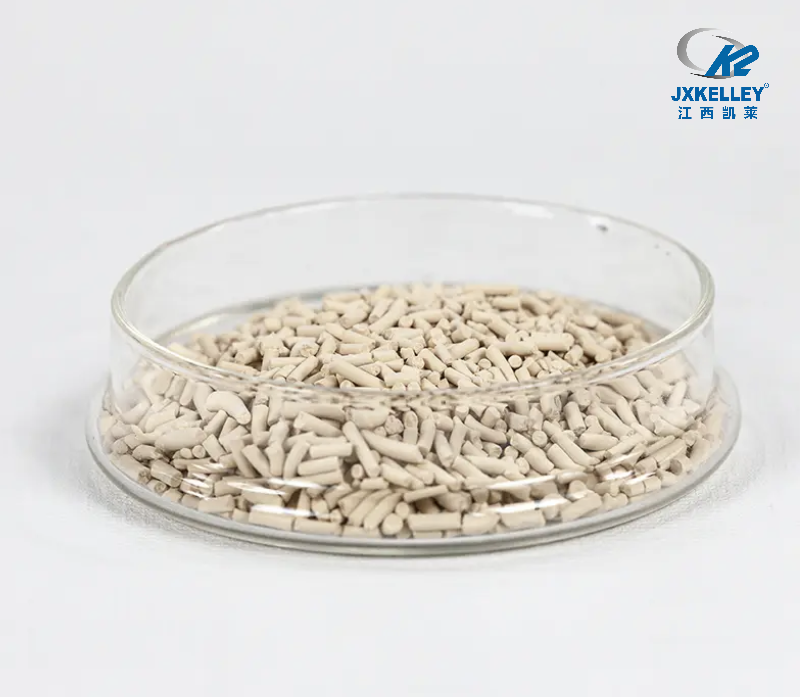
In industrial dehydration and purification, the “mass transfer zone” is the area within a vessel where active adsorption occurs. A shorter mass transfer zone allows for better utilization of the adsorbent bed. JXKELLEY optimizes this through the careful calibration of its 3A, 4A, and 13X molecular sieve variants.
For instance, in the cryogenic air separation industry, the removal of water vapor and carbon dioxide is vital to prevent equipment freezing. The company’s 3A molecular sieve is engineered with a precise 3-angstrom pore size, specifically excluding larger molecules while maintaining a high affinity for water. By optimizing the silica-to-alumina ratio, the company ensures that its products meet stringent industry standards, such as HG/T 2524 and GB/T 10504. This focus on static water adsorption capacity results in longer cycle times for drying towers, directly translating to fewer regeneration cycles and lower energy costs for the end user.
In natural gas processing, the use of 5A and 13X sieves allows for the selective removal of hydrogen sulfide and mercaptans. By fine-tuning the cation exchange process during manufacturing, JXKELLEY enhances the selectivity of the beads, ensuring that high-purity methane is recovered with minimal loss of pressure.
5G Smart Manufacturing and Physical Durability
A molecular sieve with high theoretical adsorption capacity is useless if it breaks down under the physical stress of high-pressure gas flow. Dusting and attrition are common industry pain points that lead to pressure drops and downstream contamination. To address this, JXKELLEY invested in a 5G-powered intelligent manufacturing facility in 2020.
Operating over 80 automated production lines with an annual capacity of 200,000 cubic meters, the plant utilizes advanced isostatic pressing and high-temperature calcination. This technological approach yields beads with a crushing strength typically reaching or exceeding 30N per particle, while keeping the attrition rate below 0.2%. By ensuring that the molecular sieve remains intact through thousands of pressure-swing cycles, the company prevents the formation of “fines” that could clog valves or damage sensitive rotating equipment.
Precision Engineering for Specific Industrial Contexts
The modern industrial landscape requires specialized solutions rather than a one-size-fits-all approach. High-performance mass transfer is often achieved through the selection of the correct molecular sieve “flavor” for a specific gas stream. JXKELLEY provides engineering support to help clients match materials to their specific operating conditions.
In the production of high-purity oxygen for medical or industrial use, 13X-HP or Lithium-based molecular sieves are utilized to maximize nitrogen adsorption. These materials are engineered to have a higher nitrogen-to-oxygen selectivity than standard grades. Similarly, in the electronics industry, where moisture levels must be kept to parts-per-billion, the 13X-APG (Air Pre-Purification Grade) is favored for its ability to simultaneously remove CO2 and H2O at high speeds.
Sustainability through Regeneration and Stability
The true value of a high-performance adsorbent is measured over its entire lifespan. A molecular sieve that loses its capacity after only a few hundred cycles forces early replacement and increases the Total Cost of Ownership (TCO). JXKELLEY emphasizes the hydrothermal stability of its zeolites.
Because the company adheres to international quality standards including ISO9001:2018, its products are designed to withstand the thermal shocks of repeated regeneration. Even after numerous heating and cooling cycles, these sieves retain over 95% of their original adsorption capacity. This durability ensures that plants can operate for several years without the need for a full bed replacement, aligning industrial performance with operational economy.
Advancing Mass Transfer Standards
The success of JXKELLEY in the global market—exporting to more than 80 countries including Germany, Spain, the United States, and Saudi Arabia—is built on the realization that customers are not just buying ceramic or chemical beads; they are buying process reliability.
By combining the structural advantages of the Pingxiang industrial base with the precision of 5G-enabled smart manufacturing, JXKELLEY has advanced the standard for what a molecular sieve manufacturer should provide. From ensuring the integrity of the crystal lattice to providing the mechanical strength required for high-pressure beds, the focus remains on the micro-level interactions that drive macro-level industrial success. In a world where efficiency defines competitiveness, high-performance mass transfer is the silent partner in sustainable industrial growth.
For more information on high-performance adsorption solutions, visit: https://www.kelleychempacking.com/.
Post time: May-14-2026